

Article
Charukeshi Bhatt
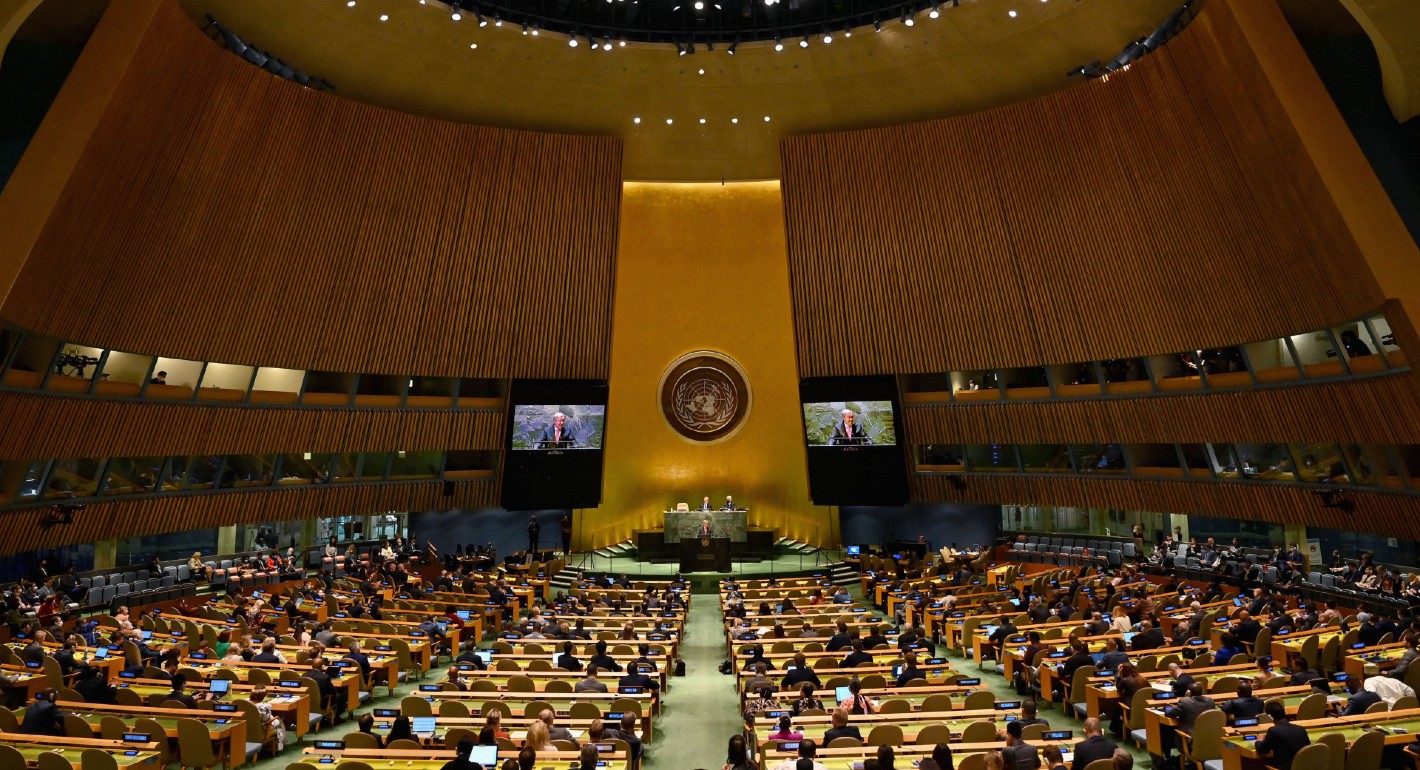
Source: Getty
The final report by the Group of Governmental Experts is a key milestone toward a potential instrument regulating Lethal Autonomous Weapons Systems and has garnered both accolades and criticism.
On September 4, 2026, the Group of Governmental Experts (GGE) on Lethal Autonomous Weapons Systems (LAWS), constituted under the United Nations’ Convention on Certain Conventional Weapons (CCW), concluded discussions under its three-year mandate. The group has met twice every year since 2017, deliberating one of the most consequential and topical issues at the intersection of technology and security: the regulation of weapons that can identify and engage targets, and use lethal force, without human intervention.
The group’s current mandate, as decided in the 2023 meeting of the High Contracting Parties (HCP) to the CCW, was to develop, by consensus, a set of elements for an instrument to address the issue of emerging technologies in the area of LAWS. The group produced a final report based on discussions held from 2023 to 2026, building on past work since 2017. The report will be tabled at the upcoming Seventh Review Conference of the HCPs to the CCW in November this year, making it the foundational text for any future discussion on regulation and governance of LAWS. As the primary UN body entrusted with implementing treaties to regulate the use of certain kinds of weapons, the CCW’s role is significant in shaping the instrument of regulation that the GGE has spent its mandate deliberating.
The final report is a key milestone toward a potential instrument regulating LAWS and has garnered both accolades and criticism. The criticism is in part due to how long it took to conclude and the possibility that it may move to yet another round of such consultations when the Seventh Review Conference picks it up this month. Even so, it is useful to examine what the report was able to achieve. Examining the report will provide a clear sense of the threshold with which the CCW will begin its discussion on regulating the use of LAWS.
The report is also important for national policymakers, as it sets the fencing around which future guardrails on LAWS will likely be built, notwithstanding discussions and subsequent modifications to the normative structure as the CCW process itself takes place. But there is a caveat: How long the subsequent process takes could impact the effectiveness of any future guardrails. The road toward this potential instrument could be as long as that of the final report. There is a need to be mindful of how a delay in this process could affect the governance of such technologies, and a stretched timeline leaves little room for negotiation.
This article looks at the final report produced by the GGE, examines key tenets of the set of elements for an instrument on LAWS, and identifies gaps that remain unaddressed. It then looks at what’s next in the process toward an instrument of regulation and what the time delta between ongoing multilateral discussions and the eventual adoption of an international instrument could mean for the global governance of LAWS. As these weapons are increasingly used in combat, the risk is that an international instrument seeking to regulate their use might arrive too late.
Under its 2023 mandate, the GGE’s task can be broadly understood as the following:
Discussions and negotiations within the GGE since 2017 have contributed to the final report. This article compares the advance copy of the final report to the rolling text circulated in December 2025, which was the basis for discussions held under the two sessions of the GGE this year. This comparison might be helpful in understanding the changes introduced in the final draft.
In the rolling text from December 2025, LAWS were described as a “functionally integrated combination of weapons and technological components capable of identifying, selecting and engaging a target without intervention by a human operator.” The text also clarified that humans setting target parameters did not exclude a system from the definition of LAWS. Meanwhile, the September 2026 report defined LAWS as systems capable of identifying, selecting, and engaging a target in a way that “results in loss of life,” without human intervention. The main change here was the emphasis on the weapon’s autonomous capability to cause loss of life, whereas the previous definition focused on the autonomous capability of a weapon to identify, select, and engage targets. This could narrow the scope of what constitutes LAWS, potentially excluding autonomous weapons that injure but do not kill.
The two documents maintain significant continuity when it comes to this tenet. Both maintain that IHL applies to international and non-international armed conflicts and governs “all weapons, means and methods of warfare.” The text also states that IHL applies fully to the development and use of LAWS and that obligations rest on states, parties to armed conflicts, and individuals, and not on machines. The rolling text from December 2025 however, placed stronger restrictions on states in that it specifically “prohibited certain LAWS whose effects could not be anticipated and limited as required by IHL and required states to refrain from manufacturing, acquiring, stockpiling and transferring such LAWS that did not comply with IHL.” The report of September 2026, while maintaining the applicability of the IHL to all LAWS, removes the restrictions placed on states with regards to manufacturing and stockpiling.
While the two documents retain the central idea that human control and judgement are necessary for compliance with IHL, there is considerable weakening of the language when thinking of human-machine interaction and the transparency of a weapons system. As mentioned above, the obligations of IHL compliance rest on individuals and states. The December 2025 text mentioned “context-appropriate human judgement and control” and listed measures, including “responsible chain of command and control, human assessment of legal obligations and limits of the scale, types, duration and geographical scope of operations.” This rolling text was subsequently modified and shared in the first session of the GGE conducted in June 2026, where, in addition to the aspects of human control and judgement, the states’ responsibility to ensure that LAWS were “adequately predictable, reliable, traceable and explainable” to those responsible for their use was also added. The report of 2026 retains “human control (over LAWS) directly or indirectly, before and during use,” but it does away with “predictability, reliability, explainability and traceability” as a requirement for LAWS to comply with IHL. These requirements for AI systems are crucial for assigning human agency and accountability. Being able to ascertain why AI systems prefer certain outputs over others is key to identify where biases originate. In the context of weapons systems, such explainability is critical to ensure compliance with IHL principles of distinction and proportionality. In the absence of explainability requirements, there will be no consequence to a weapon system misidentifying a target group.
The GGE’s recommendations will be taken up by the Seventh Review Conference of the HCPs scheduled for November 2026. The CCW convenes these conferences every five years as forums to review the different protocols, each of which ban or regulate specific kinds of weapons, asses their implementation, and make amendments. To keep the convention flexible and responsive to the changing nature of conflicts, weapons, and their technologies, Review Conferences also consider and discuss the creation of new protocols—as in the case of the Protocol on Blinding Laser Weapons (Protocol IV) that was deliberated and drafted at the Review Conference concluded between 1995 and 1996, or the expansion of their existing scope of implementation.
To be clear, the creation of a protocol will not automatically forbid the use of a kind of weapon. Protocols only apply to state parties to the Convention that have ratified them. Further, states also can denunciate their association with the Convention and its protocols via Article 9. The CCW remains important however, because it provides a framework for developing shared norms that prevent military interests from overriding humanitarian norms during times of conflict. Its value is in creating a moral and political suasion for states. It has also, in the past, addressed the risks of weapons before their full-fledged deployment. For example, Protocol IV prohibited blinding lasers before they became widely used. This preventive role is especially relevant when thinking of weapons powered by emerging technologies whose full effects are unknown as they continue to evolve. CCW can help establish norms for the use, transfer, and proliferation for such weapons before their harmful effects become entrenched.
The final report of the GGE was endorsed by seventy-six members, seventy of which are HCPs of the CCW, meaning that they will likely participate in the proceedings of the review conference. This majority could make it easy to carry on the momentum of the GGE into the review conference, and for the set of elements of an instrument to be seriously considered for a draft text for a potential instrument.
With regard to the GGE’s final report, the Review Conference has a few possible ways forward. It may continue the GGE’s mandate to further discuss the issue of LAWS. Proposals being submitted to the Seventh Review Conference are already advocating for the need for more discussions on LAWS. However, the UN Secretary General’s 2026 deadline to conclude negotiations on a treaty on LAWS might pressure states to move toward the next steps.
Alternatively, the Review Conference could begin formal proceedings toward negotiating a binding instrument. This seems likely because a majority of endorsers of the GGE report are HCPs participating in the Review Conference. Moreover, a cohort of countries represented by Brazil have extended support for the work done by the GGE and called the December 2025 rolling text sufficient to negotiate an instrument for LAWS. The urgency of beginning the process of negotiations is also echoed in the joint appeal made by the UN and ICRC in August this year to “establish specific prohibitions and restrictions on the use of autonomous weapons systems.” Strong support for a binding instrument is already visible both at the Seventh Review Conference, with proposals submitted for negotiating a protocol, and at the UNGA, with 163 states voting in favor of the resolution “to advance to negotiations on an instrument on lethal autonomous weapons systems.”
The CCW may also exercise the option of abandoning the work concluded under the GGE. This could stem from disagreements over the necessity of a binding instrument that persisted within the GGE and reportedly even continued in the culminating session. It was in response to these differences that forums outside the GGE formed to address emerging technologies in the military domain. For example, the Responsible use of AI in the Military Domain (REAIM Process) was launched in 2023 by the Netherlands and the Republic of Korea. As part of the REAIM Process, a Global Commission was set up which concluded its mandate in September 2025. Its report, titled Responsible by Design, consists of guiding principles and recommendations for states, militaries, and industry when thinking of AI use in the military domain.
The U.S.-led Political Declaration on the Responsible use of AI and Autonomy was the second track that emerged in 2023. It set out voluntary guidelines for the development and use of AI in the military. While the declaration did garner over fifty endorsements at the time of its launch, it was not a legally binding document. It was also launched during the Joe Biden administration and the current policy toward AI in and for the military domain seems to be more permissive. The Pentagon’s dispute with Anthropic over the use of its models for fully autonomous weapons points more directly to the shift in this policy and toward a more permissive stance.
Moreover, these processes and platforms were only forums for discussions, seeking convergence around voluntary principles and responsible use-practices. None of them had the power to enforce a binding treaty.
As modern day conflicts witness increased deployment of AI-assisted weapons, with some being associated with autonomous behaviors, the governance process will become complicated. Longer negotiations will increase the risk of the final instrument reflecting the lowest common denominator among states. This is so because, as AI-assisted weaponry capabilities get more distributed among states, they will be more inclined to interpret concepts such as “human control,” meaningful human judgment, and acceptable levels of autonomy according to their interests. The draft report is already being dubbed by some experts as a weaker version of previous texts by the GGE.
In the interval between the current deployment of AI-assisted technologies in conflict and the implementation of any binding instrument, companies building AI systems are setting their own red lines through contracts, deployment restrictions, and technical safeguards. These voluntary red lines, however, will be hard to maintain as companies try to balance market competition and ethical commitments. The Anthropic case is an example to consider in this regard. The U.S. Department of Defense’s subsequent contract with another AI firm points to the limitations of such redlines.
First, these do not reflect universally agreed upon rules that bind other states or companies. And what could emerge is a fragmented regulatory space where acceptable military AI use and deployment vary according to the supplier.
Secondly, market competition among rival technology providers will ultimately weaken the leverage of even one company willing to adhere to voluntary checks. In active conflicts, where procurement needs to happen quickly, states might look for comparable alternatives launching a race where suppliers might be disincentivized to even build voluntary guardrails for themselves. Over time, this could also weaken the incentives for states themselves to exercise restraint. If the state can secure technological capability through different vendors, then voluntary adherence to normative guardrails might be seen as bearing an unjustified strategic cost. Conflict and competition will reward vendors willing to maintain lower thresholds of regulation, and this may further pressurize other states and companies to reduce restrictions.
The final report of the GGE is a result of a consensus-driven process and was able to bring together multifaceted differences across the technical, legal, ethical and the aspects of a potential instrument to govern LAWS. With the UN Secretary General re-iterating the need for an instrument of governance, the urgency of the matter is well established. The Seventh Review Conference is also likely to approach the report with some momentum since most of the states that endorsed the report are also HCPs to the CCW and will sit at the Review Conference.
Still, a few concerns must stay in view. First, the timeline for an instrument cannot be stretched too far. A drawn-out negotiation will leave little room for effective control, especially as technology keeps advancing. Second, there is also the need to think about how to keep companies committed to voluntary guardrails, whether through incentives or reputational benefits. While this does not fall under the purview of the work that the Review Conference will undertake, engagement with industry will be critical to the designing of an instrument, specifically aspects of assigning human responsibility and the extent of control and judgement. This would help instill more trust and create moral suasion for industries to devise guardrails for technologies they build.

Research Analyst, Technology and Society Program
Charukeshi Bhatt is a research analyst with the Technology and Society program at Carnegie India. Her work focuses on the intersection of emerging technologies and international security.
Recent Work
Charukeshi Bhatt



Nidhi Singh, Tejas Bharadwaj, Shruti Mittal, …
Carnegie does not take institutional positions on public policy issues; the views represented herein are those of the author(s) and do not necessarily reflect the views of Carnegie, its staff, or its trustees.

The GCC states’ use of Artificial Intelligence will generate much leverage over the global digital infrastructure and climate talks.

Camille Ammoun

Uneven investment in the technology will widen regional inequalities in the Middle East and North Africa.

Nur Arafeh

The GCC states are, to varying degrees, opening up to digital finance. This is part of an effort to diversify their economies and wean themselves off U.S.-dominated monetary systems.
Ala’a Kolkaila

Algeria and Egypt pressed China’s telecom national champion Huawei for more value-added manufacturing and technology transfers. The company responded, but it ultimately improved its brand image without engaging in meaningful capacity building.

Tin Hinane El Kadi

Incidents involving Iran have been among the most sophisticated, costly, and consequential attacks in the history of the internet.

Collin Anderson, Karim Sadjadpour